
Restorative Justice Practices Honor Everything Social Work Values. So Why Aren't they being taught?
Apr 28, 2026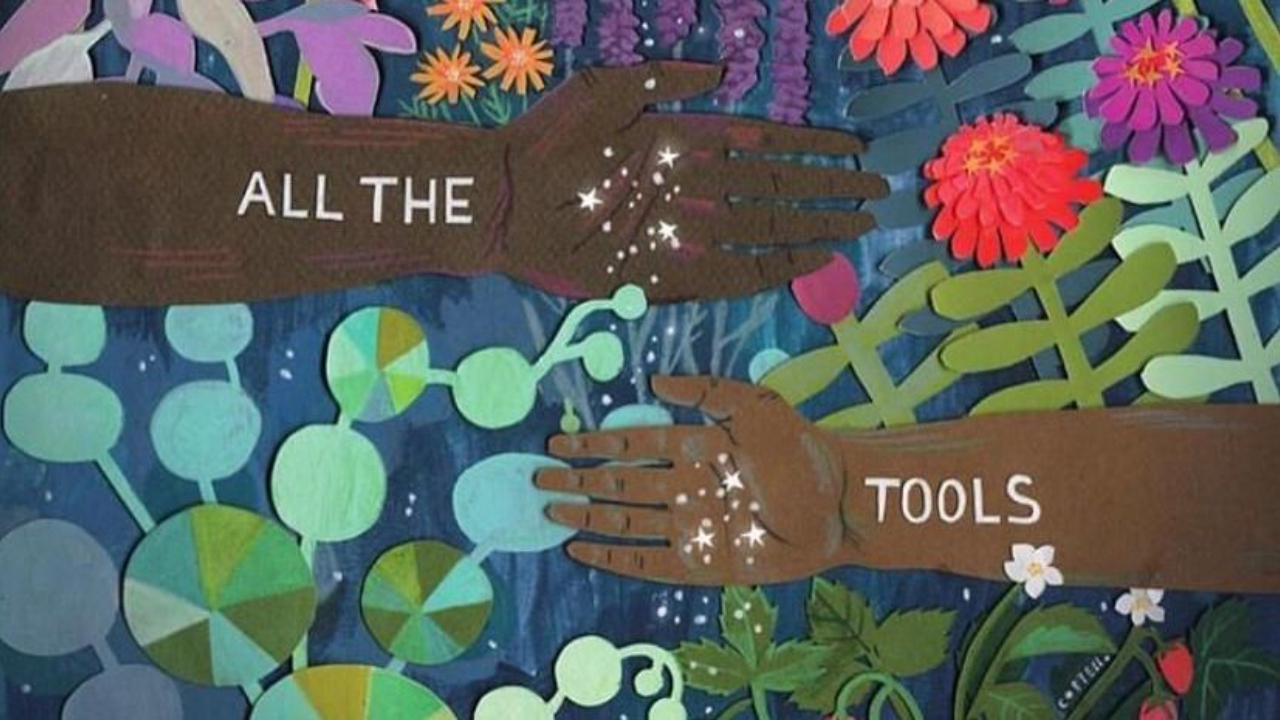
I have been doing this work for over a decade. I have sat in circles with youth facing incarceration, with staff teams on the verge of implosion, and with families trying to bridge ever deepening divides... And in all of that time, the question I kept coming back to was simple: why don’t more people know about this?
This essay is my attempt to answer that question — and to introduce the training I built because I got tired of waiting for someone else to.
If you are a licensed social worker in New York State, I’ve got 5 CEU credits with your name on ‘em. Register today at castingcircles.com.
Banging My Head Against the Wall
When I graduated college, I did not know I was going to become a trainer.
But over the course of the last decade — working with youth and adults, in crisis and conflict, often facing enormous forces stacked against them — I found myself voluntarily getting in front of groups to teach what I saw as a better way. A way that we could actually help people instead of perpetuating patterns of harm and injustice.
In 2017, I started a community workshop called “Keep Calm & Know Your Rights” — teaching high school students their rights in interactions with law enforcement. Ah, those were simpler times. Back then, my work-wife, Dana, and I went from school to school, county department to county department, spreading the gospel of Restorative Justice wherever they would have us.
For nearly a decade, I talked to rooms full of educators and bureaucrats, trying desperately to reach them. I believed in this work so deeply — I had to, to keep showing up the way I did, trying to convince droves of cogs in a sleepy system. I banged my head against the walls of every institution, hoping someone would see the light.
In 2019, I left my Juvenile Justice Restorative Justice role for a position working directly with school districts. I saw public schools as ground-zero for societal change— still do. I also thought: finally. These people want what’s right for kids. They’ll get it.
Boy, was I wrong.
Schools may be some of the most deeply entrenched institutional systems one could work within. And that made me obsessed — how the hell could we be failing kids at these levels? We are issuing over 3 million suspensions a year, and students at high-suspension schools are 15 to 20 percent more likely to end up incarcerated as adults. It’s called the school-to-prison pipeline, and some of the worst offending schools didn’t wanna hear about it.
Thinking about what drives systemic change led me to Restorative Practices — Restorative Justice’s younger cousin. I say younger because, even though Restorative Practices contains Restorative Justice under its ideological and epistemological umbrella, it is newer, and largely lacking in the lineage that Restorative Justice carries. It appears somewhat ahistorically in the early 2000s with the advent of the International Institute of Restorative Practices. No shade intended — I am a Licensed IIRP Trainer. I just find the distinction genuinely confusing for people, and I also resent how schools, in my experience, distance themselves from the word “justice.” I love the word Justice! and I also love the word “Practices,” and I could write a whole separate essay on why practices matter. So I’ve decided to use the phrase Restorative Justice Practices for my own work. That’s my hill and I’m sitting on it watching clouds go by and looking foward to having friends who will join me there.
The Master's Tools

Most of us entered the helping fields — Social Work or otherwise — with a genuine desire to make the world better. To help the downtrodden, the underdogs, to right injustices. And then we became part of the very systems causing the problems.
This is not our fault. It is the paradox of working in a world shaped by centuries of white supremacist capitalist patriarchy. And we’re left to navigate one case at a time, one classroom at a time, one staff meeting at a time.
The values that brought us here are real. Social justice. Human dignity. Self-determination. Genuine human connection. If you are anything like me, you are still trying, despite disillusionment, burnout, and the daily absurdity/tragedy of it all — to make those values real.
But what tools are you using?
Audre Lorde said it best: you cannot dismantle the master’s house with the master’s tools. Einstein put it another way: you cannot solve a problem with the same thinking that created it.
We were trained in assessment and intervention. Documentation and compliance. Risk identification and risk management. We learned to validate, empathize, motivate. We learned to be a force of unconditional positive regard. We even got one whole semester to explore our identities, positionality, and biases. What joy.
What we were rarely taught was how to be in relationship with the people we serve in ways that actually reflect the values we claim. How to hold authority without causing harm. How to move toward conflict instead of away from it. How to have the hard conversation that actually changes something rather than just checking a box.
That gap — between the values we carry and the tools we have been given — is real.
Archaic Revival

Restorative Justice Practices were the first real way out I found.
I’m skipping over a whole chapter of my younger years when I pursued psycho-pharmacology in the hopes of doing psychedelic research (ironically, back in 2012 I thought I had missed the boat 🤣) — but honestly, I think that was just another attempt at the same thing: Finding the exit from this dystopian hellscape we call modern society. I was deep in Terence McKenna’s concept of the archaic revival — the idea that what’s needed isn’t progress forward but a spiral back. Not to primitivism exactly, but to the experiential wisdom that indigenous shamanic traditions preserved and that Western rationalism systematically suppressed.
Restorative Justice Practices gave me a piece of that archaic wisdom that didn’t require plant medicine to access.
And archaic is exactly the right word. This is not new. Even its modern revival is approaching 50 years — the first experiments took place in the 1970s. What is relatively new is that people have taken ancient, intuitive wisdom and formalized it into a framework that is transmittable. That can be taught. That can be practiced, refined, and brought into even the most rigid institutional environments.
That is not a small thing. That is everything.
The Invitation
I built this training because I want more people to have these tools. Because with practice — real, embodied, repeated practice — we begin shedding the layers of inherited authoritarian, patriarchal, capitalist, white supremacist, hyper-rational conditioning that none of us asked for and all of us carry.
People like you: Social workers, counselors, educators, supervisors — people doing the hardest relational work imaginable with frameworks that were never designed for the depth of what they are actually doing. People who know there has to be a better way and just need someone to show them how.
Introduction to Restorative Justice Practices is a live, participatory, half-day training on Zoom, offered once a month. Small by design — because this work is best learned relationally, alongside others, in real time.
It is designed with social workers in mind and genuinely useful for anyone who works with people. If your work involves navigating conflict, holding authority, building relationships, or trying to create something better inside a system that was not built for it — this training is for you.
5 CEU credits for New York State social workers.
The tools you were never given exist. They have always existed.
Come find them.
[Learn More Here]
SUBSCRIBE FOR WEEKLY LIFE LESSONS
Lorem ipsum dolor sit amet, metus at rhoncus dapibus, habitasse vitae cubilia odio sed.
We hate SPAM. We will never sell your information, for any reason.