• CASTING CIRCLES PROFESSIONAL DEVELOPMENT

    INTRODUCTION TO RESTORATIVE PRACTICES

    A better, simpler way to hold power, navigate conflict, and build relationships that actually work for all.

  • DOES THIS SOUND LIKE YOU?

    You know there has to be a better way...

    You became a social worker because you saw the weight people carry, the cycles that need to break, the systemic suffering that characterizes the modern world.

    You've sat across from families in crisis and felt the limit of what a 45-minute session can accomplish. You've watched clients make real progress, then return to the same system, the same environment, the same situation... and unravel. You've burned out, or seen colleagues burn out, under the pressure of trying to heal people inside the very structures that are making them sick.

    "It is no measure of health to be well adjusted to a profoundly sick society"

    ~Jiddu Krishnamurti

    This is not a failure of skill or compassion. It is the logical outcome of working within a system organized around profit rather than people. White supremacist, capitalist patriarchy does not just shape our economy. It shapes our relationships. It determines who is seen as fully human and who is not. It teaches us to rank each other, fear each other, extract from each other. It breeds the scarcity mindset, the punitive logic, the shame and isolation and distrust that you encounter every day in your clients — and if you're honest, in yourself (I'm looking at you, Inner Critic!). The same system that extracts labor until bodies break is the same system that criminalizes poverty, separates families, incarcerates the most vulnerable, and then calls not being able to survive a personal failing.

    Social workers are on the front lines of these issues. And the tools we've been given — case management, compliance frameworks, "medically necessary" treatment plans — were designed within that same logic. They manage symptoms. They treat healing as a commodity. They rarely touch the root.

    The root is that we are species that has been violently severed from its own nature — from the ways of being together that humans embodied for tens of thousands of years before capitalism, colonization, and white supremacy were imposed on the entire world.

    Restorative Practoces are derived from Indigenous cultures across the globe. Indigenous here is not just a buzzword. Nor is it something that belongs only to specific cultures as mere identity. It is a memory of what human community actually looked like before it was organized around domination and extraction. Women and Children at the Center. Circles. Consensus. Collective accountability. Repair over punishment. The understanding that individual wellbeing cannot be separated from the wellbeing of the whole. Restorative Practices are not radical new ideas. They are ancient ones. They are, in the most literal sense, our original ways of being with each other — ways that were systematically dismantled because they were incompatible with a system that required our separation to function.

    Restorative practices are a return to those values. To a truth about human nature that was always there and never fully disappeared — that we are wired for connection, for repair, for belonging to each other.

    When you bring restorative practices into your work, something shifts in you and through you as you begin to cultivate a culture which supports humanity.

    One circle at a time. One honest conversation at a time. One moment of genuine repair at a time.

    That is how the world changes.

    Not from the top down. From the inside out.

    As within, so without.

    As Above, so below.

    🌀

  • IMAGINE LEAVING THIS TRAINING WITH...

    Tools that will help you transform whatever space you're in.

    You will leave with language for what good leadership, healthy authority, and genuine care actually look like in practice — not just an intuitive sense that you know it when you see it, but a framework you can teach, model, and return to.

    You will leave with tools for having difficult conversations about harm, mistakes, and accountability, in ways that actually invite reflection rather than defensiveness. Without tools, even the most skilled practitioners tend to fall back on what their nervous system learned long before any professional training. This gives you something else to reach for.

    You will leave with genuine hope that it is possible to bring relational care into even the most rigid institutional environments — because you will have seen the framework, understood the philosophy, and experienced what it feels like in practice.

    You will leave reminded that you already posesses the power to create change. It lives in how you show up in your relationships and your spaces. How we relate to each other is the ground from which everything else — culture, climate, creativity, and care — grows.

  • THE TRAINING...

    Designed for social workers. Useful for everyone.

    This training is rooted in the IIRP's foundational Restorative Practices framework, woven together with over a decade of Maria's direct experience doing restorative work with youth and adults across criminal justice, school, and community settings.

    This training was developed with social workers in mind — but the core of what it transmits is useful to anyone who works with people.

    Conflict and power dynamics are present everywhere. In every workplace, every classroom, every family. There is not a person who wouldn't be changed by this information.

    This training will serve you, if you:

    ✦ Work in: Schools, juvenile justice, child welfare, community-based organizations, or family services.

    ✦ Work with: adolescents, families, or community groups.

    ✦ Supervise, manage or oversee others.

    ✦ Are interested in tools which invite greater interdependence and respect into all your relationships

    This is highly participatory LIVE Webinar on Zoom, held in a small group, and designed so that the experience of everyone in the room becomes part of the learning.

    And for licensed social workers in New York State, it counts. CEU approval is pending with NYSED — join the waitlist to be notified the moment credits are confirmed.

    This training is for you if:

    ✦ You work with people in any capacity and care about doing it well

    ✦ You are tired of having difficult conversations without the right tools

    ✦ You want a framework that matches the values that brought you to this work

    ✦ You are curious about restorative approaches but don't know where to start

    This training is probably NOT for you if:

    ● You are looking for a passive, sit-and-listen CEU experience

    ● You are not open to examining how you currently hold power and authority

    ● You are looking for a quick certification rather than a genuine shift in practice

  • WHAT YOU WILL EXPLORE...

    Five areas of learning.

    The history of Restorative Practices from its ancient indigenous roots to the school-to-prison pipeline in modern America — and why this framework is so urgently relevant for this particular moment in time.

    The foundational frameworks that explain what makes relationships work and what causes them to break down: The Fundamental Hypothesis, Social Discipline Window, Fair Process, and Affect Psychology.

    The Restorative Practices Continuum and how to identify the right approach for any situation you encounter.

    Affective statements and questions and their ability to foster genuine reflection and accountability.

    The purpose and structure of the circle process, and situations and settings in which circles can be applied.

  • WHAT MAKES THIS DIFFERENT...

    Two worlds. One Training.

    Most Restorative Practices trainings are not designed with social workers in mind. Most social work CEU courses do not offer restorative content. This training sits at the exact intersection of both — grounded in the theory and ethics of social work, and rich with the practical tools of restorative practice.

    Most CEU trainings lecture at you. This one doesn't. It is intentionally small, live, and participatory — because restorative work is best learned relationally. You will not be watching a recording or clicking through slides alone. You will be learning alongside others, practicing skills in real time, and experiencing the very format the training is teaching.

    Grounded in years of direct experience doing this work with youth and adults, in schools and justice settings, in individual sessions and with whole institutions. This training doesn't talk down to you, and definately won't be dry. It'll It treat you like the experienced professional you are.

  • WHAT OTHERS HAVE SAID...

    From those who have worked with Maria.

    Section image

    "I have very much enjoyed collaborating and learning along side Maria. She has consistently shown up with humility and warmth and has consistently demonstrated her deep understanding of Restorative Practices throughout our interactions. Her commitment and ability to prioritize genuine human connection while balancing this skillfully with professional, supportive boundaries fuels my confidence and interest in collaborating with her in the future."

    Katherine B., Restorative Practitioner

    Section image


    “Maria is extremely passionate, knowledgeable and experienced in the field of Restorative Justice and Restorative Practices. She provided a wonderful training that was both interactive and full of relevant information and tools"

    Dana K., Training Participant

    Section image

    "Maria is a gifted facilitator in all areas connected to the fostering of Restorative Justice practices. I have worked with her for years in JCABs and have been inspired by her empathy, compassion and wisdom. She is an intuitive, insightful facilitator who calls forth the best from both her colleagues and circle participants. I learn from her each time we work together and what I learn is always life giving and good."

    Pat C., Retired Educator & JCAB volunteer

    Section image

    "Her passion for this work connects with educators across grade levels and classrooms. Maria brings supportive strategies that are appropriate and grounded in real classroom experiences. She provides clear guidance, models best practices, and supports staff in building confidence and consistency."

    Llajaira D., Middle School Assistant Principal

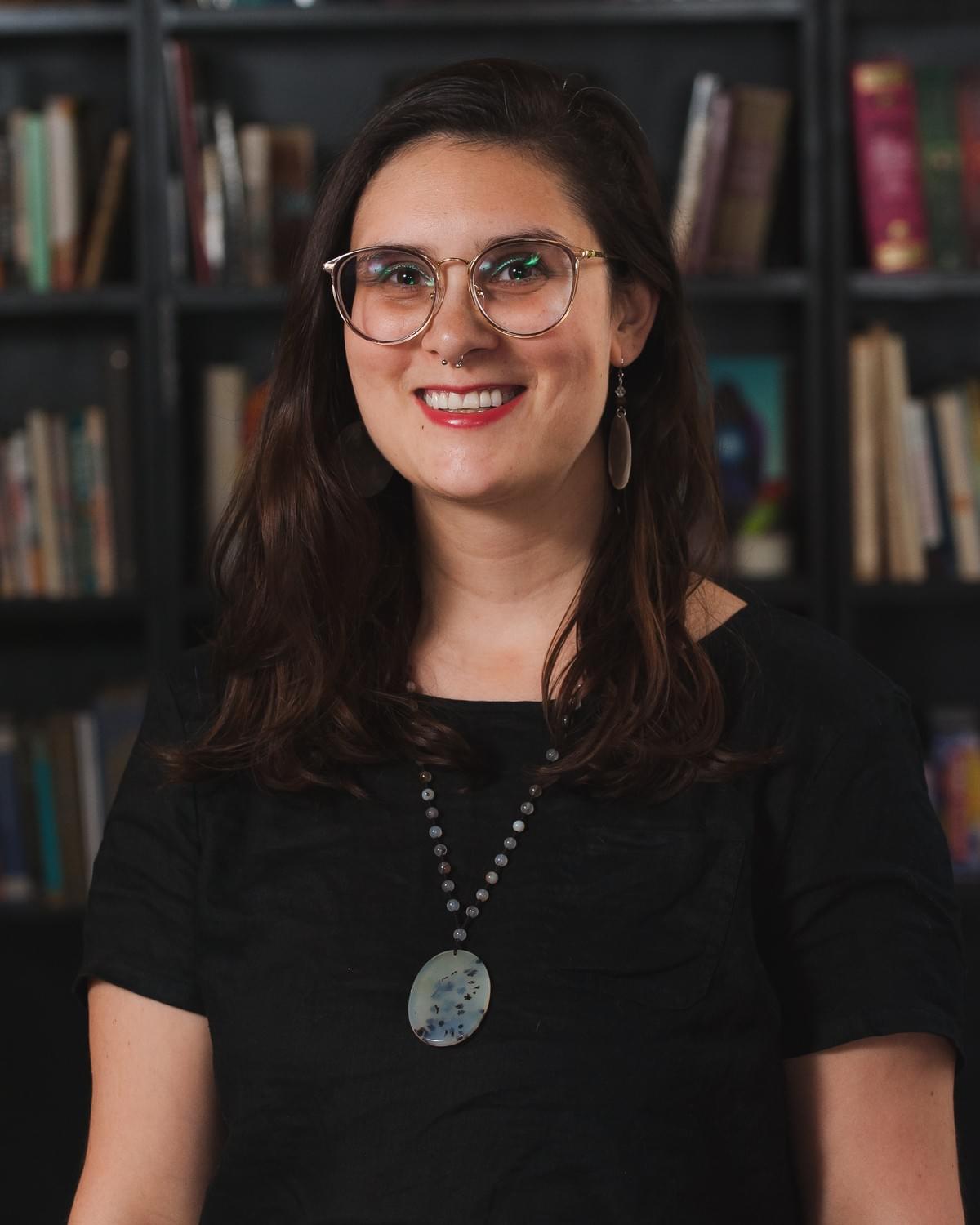
  • MARIA SCARANGELLA, LMSW

    For the past decade, I have been dedicated to promoting Restorative Justice in the Hudson Valley. In 2014, I joined Family of Woodstock's Restorative and Juvenile Justice Services Department, serving as a Case Manager for Ulster County's One80 program for six years. I later expanded the department to include community cases and school-based Restorative Justice programs, eventually becoming Assistant Program Director. From 2021 through 2024, I worked as the Restorative Practices Coordinator for the Kingston, Saugerties, and New Paltz School Districts, supporting each district in its unique approach to implementing Restorative Practices.

    My work is backed by extensive training. I am a Fellow at Georgetown University's Center for Juvenile Justice Reform, where I earned a certificate in School-Justice Partnerships and Diversion Pathways. I have studied under Dr. Tom Cavanagh of RJEd and became a Licensed Restorative Practices Trainer through the International Institute of Restorative Practices (IIRP) in 2022. I have also served as Assistant to the Executive Director and a volunteer Circle Keeper in the Newburgh Model at The Restorative Center in Newburgh, NY.

    My approach to Restorative Justice is deeply rooted in indigenous wisdom. In 2020, I completed EarthTime Project's Ancient Art of Awareness, a one-year apprenticeship in Native philosophy, and have also trained at Tom Brown Jr.'s Tracker School. I have studied narrative medicine, storytelling, and hypnosis through the Coyote Institute.

    In May 2023, I earned my Master's in Social Work from SUNY Albany. In 2024, when Ulster County no longer deemed Restorative Practices a funding priority, I left Family of Woodstock and started Casting Circles — to continue and expand the use of circles, because I truly believe that sitting in circle together and talking about what matters to us is the medicine our homes, schools, organizations, and communities need most right now.

    This work reflects my own journey of using relationships, community, and conflict as teachers.
  • TRAINING DETAILS

    Everything you need to know.

    FORMAT

    Live Webinar via Zoom

    DURATION

    4.5 hours of instruction + 1 hour lunch

    DAY

    Every 2nd Wednesday

    CEUS

    4.5 credits — NY Social Work (Approval pending)

    TIME

    9:00am - 2:30PM ET

    INVESTMENT

    $247.77

  • FAQs